The policies and public statements of Donald Trump regarding immigration have been among the most polarizing and persistent features of his political career. For his critics, the evidence is clear: his language, policies, and actions demonstrate a deep-seated antagonism towards immigrants, particularly those entering the country illegally or from non-European nations. For his supporters, his stance is framed not as hatred, but as a necessary, vigorous defense of national sovereignty, border security, and the rule of law.
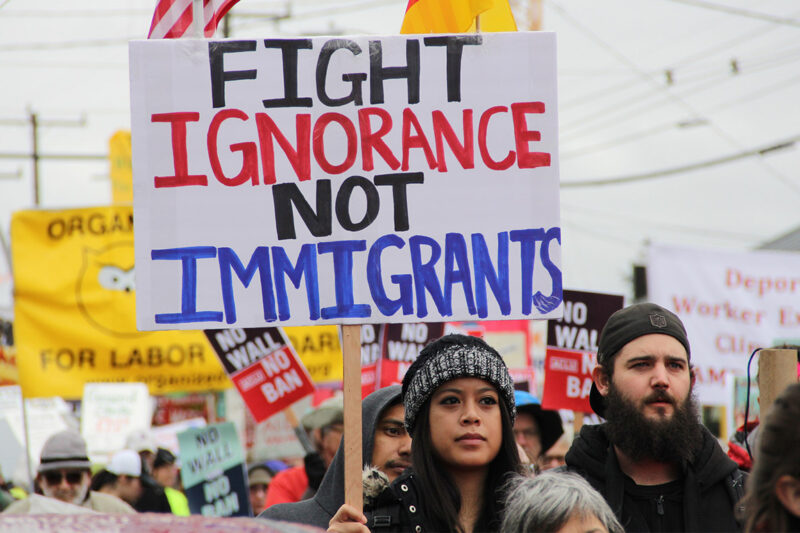
This intense disagreement over the motivation and impact of his immigration platform makes it a central topic of debate. Examining the specific rhetoric, policies enacted during his presidency, and the legal challenges they faced is crucial to understanding why many believe the accusation that “Trump hates immigrants” is justified, while others view it as a gross mischaracterization of his “America First” agenda.
The Rhetoric: Language and Public Perception
A major source of the controversy surrounding Trump’s immigration stance stems directly from the language he has employed in speeches, rallies, and on social media.
The Use of Dehumanizing Language
Critics frequently point to Trump’s use of specific terminology as evidence of animosity. The characterization of undocumented migrants, particularly those arriving at the southern border, often uses terms like “invaders,” “vermin,” or referring to immigrants from certain nations as people coming from “shithole countries.” Legal and political analysts argue that such language serves to dehumanize entire groups of people, making it easier for supporters to justify severe or even punitive policies against them. This rhetoric is often seen as setting a hostile tone that bleeds directly into policy implementation.
Focusing Exclusively on Undocumented Immigration
While the United States operates both a legal and an illegal immigration system, Trump’s focus has overwhelmingly been on the latter, often giving the impression that he views all immigrants through the lens of criminality and border security. By disproportionately emphasizing the security risks, drug trafficking, and crime purportedly associated with undocumented arrivals, critics argue that he fosters a broader negative perception of all immigrants, neglecting the economic and cultural contributions of those who arrive legally.
Policies and Actions: Translating Rhetoric into Law
The argument that Trump’s policies reflect anti-immigrant sentiment is supported by several key actions taken during his administration, many of which were designed to drastically reduce both legal and illegal immigration.
The Border Wall and “Zero Tolerance”
The commitment to building a wall along the U.S.-Mexico border was a central policy promise. More controversially, the “Zero Tolerance” policy enacted in 2018 led to the separation of thousands of children from their parents at the border. Judges and human rights organizations condemned this practice, arguing that intentionally using family separation as a deterrent was cruel and fundamentally inhumane. For many critics, this policy was the strongest evidence yet of a punitive, anti-immigrant ideology.
Restricting Legal Pathways
Trump’s policies also aimed to make legal immigration more difficult. These efforts included:
- The Travel Ban: Initially targeting several Muslim-majority countries, critics labeled it a “Muslim Ban,” arguing it was religious discrimination dressed up as national security.
- The “Public Charge” Rule: This rule sought to deny green cards to legal immigrants who had used or were likely to use public assistance, effectively favoring wealthy immigrants and disadvantaging poor ones.
- Reduced Refugee Admissions: The administration drastically lowered the annual cap on refugees admitted to the U.S., severely limiting a traditional humanitarian pathway.
These actions are interpreted by critics as part of a broader strategy not just to secure the border, but to fundamentally alter the demographic composition of new legal arrivals.
The Counter-Argument: Sovereignty and Rule of Law
Supporters of Donald Trump vehemently reject the “hates immigrants” narrative, framing his agenda as a necessary defense of national interests.
Enforcing Existing Laws
The core defense is that Trump’s administration was simply enforcing existing immigration laws that previous administrations had neglected. From this perspective, the policies are not about bias against specific people, but about maintaining the integrity of the sovereign nation-state. They argue that a country that cannot control its borders is not truly a sovereign nation.
Prioritizing National Security
Supporters maintain that border security measures, including the wall and enhanced vetting processes, are essential for national security and public safety. They view illegal immigration as a genuine threat that must be addressed with decisive action, and they believe that any negative humanitarian consequences, while regrettable, are the fault of those who violate the law, not the government tasked with enforcing it.
Distinguishing Legal from Illegal
Many supporters argue that the president has consistently expressed support for legal immigration, provided it benefits the United States economy (“merit-based immigration”). They draw a sharp distinction between immigrants who follow legal procedures and those who enter or remain in the country illegally, asserting that criticism incorrectly conflates the two.
Conclusion: A Divisive Legacy
The debate over Donald Trump’s immigration stance is fundamentally one of interpretation: Are his policies motivated by a necessary defense of sovereignty and law, or by a discriminatory animus toward foreign-born people?
The evidence suggests that his tenure resulted in a dramatic shift toward restrictionism, characterized by rhetoric that many view as hostile and policies, such as family separation, that drew international condemnation for their severity. While supporters view these actions as lawful enforcement, critics see them as a direct assault on the values of pluralism and human dignity.
Regardless of the intended motivation, the legacy of his policies is an immigration system that is more difficult to navigate, a severely reduced humanitarian intake, and a heightened level of political and social polarization regarding the fundamental question of who belongs in America.
